Train Whistles and Timber Towns: Exploring Cambria County's Railroad Heritage Near Ebensburg
 H. Olmsted
Cambria County wasn't built on luck. It was built on iron rails, coal smoke, and the relentless ambition of an industrial era that remade the Allegheny Mountains into one of the most productive corners of America. If you stand in downtown Ebensburg today and look past the Victorian storefronts and the quiet courthouse square, you're looking at a town that survives largely because of what the railroads once moved through this county.
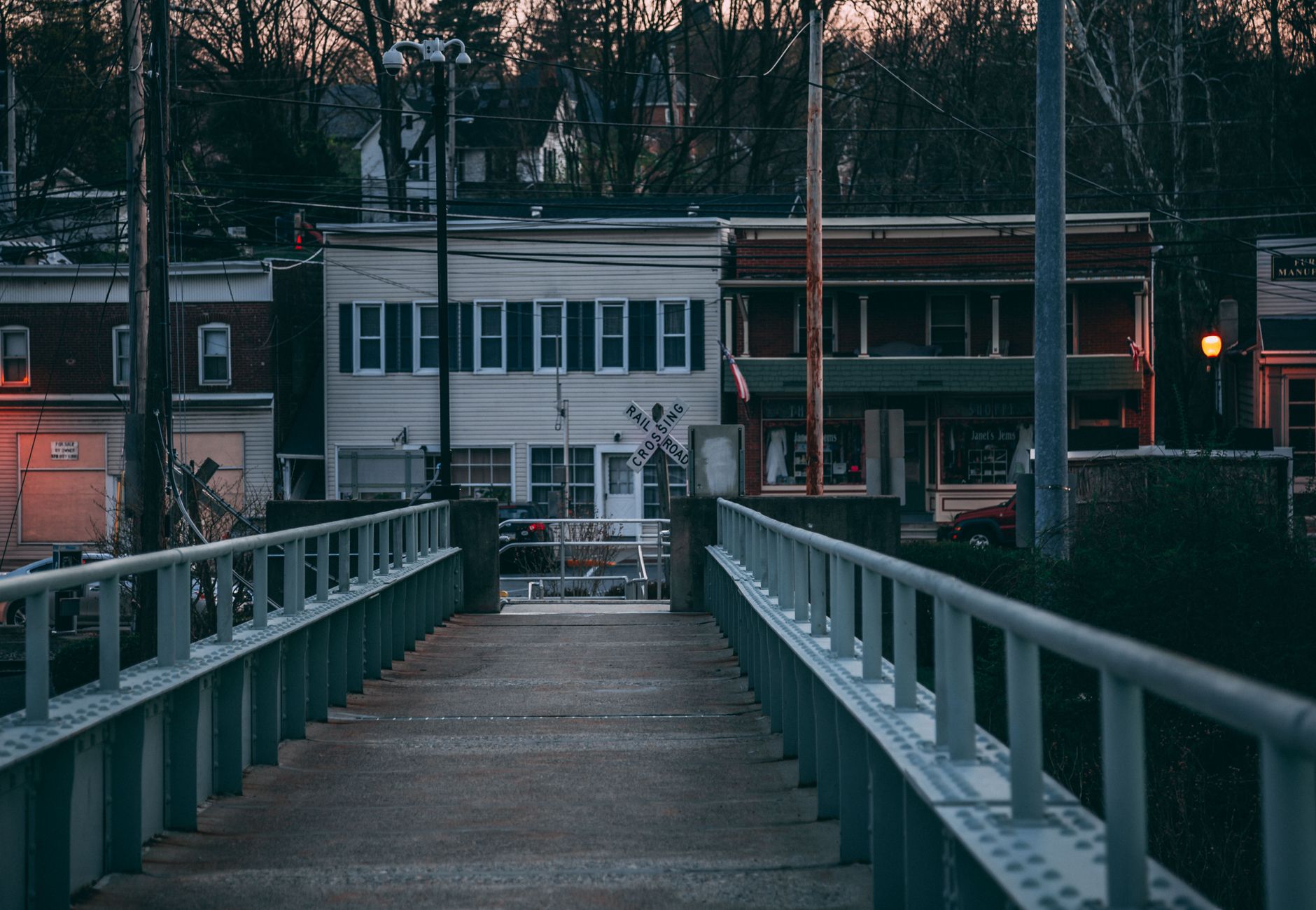 Photo by Craig Adderley on Pexels.
For history-minded travelers, that story is absolutely worth chasing.
The Railroad's Grip on This Region
Pennsylvania's railroad history is dense and layered, and Cambria County sits near its heart. The Allegheny Portage Railroad, a National Historic Site located nearby in Gallitzin, stands as one of the most remarkable engineering achievements of the early 19th century. Built to carry passengers and freight over the steep Allegheny Front before steam locomotives could manage the grade alone, it relied on a system of inclined planes and stationary steam engines. Visitors can walk the grounds, explore the visitor center, and stand at the summit where canal boats were once loaded onto rail cars and hauled up the mountain.
That's not a footnote in American history. That's the route that opened the interior of the continent.
Ebensburg's Place in the Story
Ebensburg itself served as the county seat and a hub of commerce rather than a direct railroad junction, but the prosperity the rails brought to surrounding communities absolutely shaped the town. The grand homes along High Street, the density of civic buildings, the old courthouse: these reflect wealth that flowed from the coal patches, the iron furnaces, and the freight lines threading through the valleys below.
Walking through Ebensburg with that context in mind changes how the town reads. A prosperous county seat in the late 1800s looked like this. Solid, deliberate, built to last.
Following the Tracks on the Ghost Town Trail
The Ghost Town Trail deserves its reputation among rail-trail enthusiasts across the Mid-Atlantic. Running roughly 36 miles through Cambria and Indiana counties, it follows the grade of the old Ebensburg and Black Lick Railroad and passes through the remnants of coal mining communities that once thrummed with activity. Towns like Wehrum and Bracken are ghosts now, their foundations swallowed by second-growth forest. Interpretive signs along the trail mark where buildings stood, where miners lived, where children went to school.
You can ride the full trail over a couple of days if you're ambitious, or pick a shorter section for an afternoon. The surface is well-maintained crushed limestone for much of its length. Families do it easily on hybrid bikes. What makes it memorable isn't the physical challenge; it's the sustained conversation the trail has with the past.
Gallitzin Tunnels Park and Campground
For a more immediate experience of railroad power, the tunnels at Gallitzin offer something the Ghost Town Trail doesn't: active trains. The two tunnels bored through the Allegheny summit in the 1850s still carry heavy freight traffic on the Norfolk Southern main line. At Gallitzin Tunnels Park, you can sit and watch loaded coal and intermodal trains emerge from the mountain, a visceral reminder that this industrial legacy never entirely faded.
Bring a camp chair. Bring a thermos. Trains move through regularly, and the sight of a hundred-car freight train cresting the Alleghenies at the same spot where those original inclined planes once lifted canal boats is worth sitting still for a while.
Planning Your Heritage Rail Day
A focused day trip built around railroad history might look something like this:
Start the morning at the Allegheny Portage Railroad National Historic Site in Gallitzin, where rangers lead programs and the museum contextualizes the whole era. Spend an hour or two there, then drive into Ebensburg for lunch and a walk through the downtown. The courthouse, the historic cemetery, the streetscapes along High Street all reward a slow pace. Finish the afternoon at Gallitzin Tunnels Park with coffee and a long view of the mountain.
If you want to add a physical element, pick up a section of the Ghost Town Trail the following morning.
Why This History Still Resonates
Some places wear their past lightly. Cambria County doesn't. The mines, the railroads, the industrial infrastructure that defined this region for over a century left marks in the terrain, in the architecture, in the trail systems people now hike and bike for recreation. Visiting Ebensburg with an awareness of that history gives the town a texture you won't find in a resort destination.
This is a place that worked hard and built something real. Spending a few days tracing what remains of that effort is one of the more satisfying ways to travel through western Pennsylvania.
Get Visit Ebensburg in your inbox
New posts delivered directly. No spam.
No spam. Unsubscribe anytime.