Snowshoeing and Winter Hiking in the Alleghenies: A Cold-Weather Trail Guide Near Ebensburg
 H. Olmsted
Winter has a way of emptying the trails. The leaf-peepers have gone home, the summer cyclists have hung up their helmets, and the woods around Ebensburg settle into something close to silence. That silence is worth chasing.
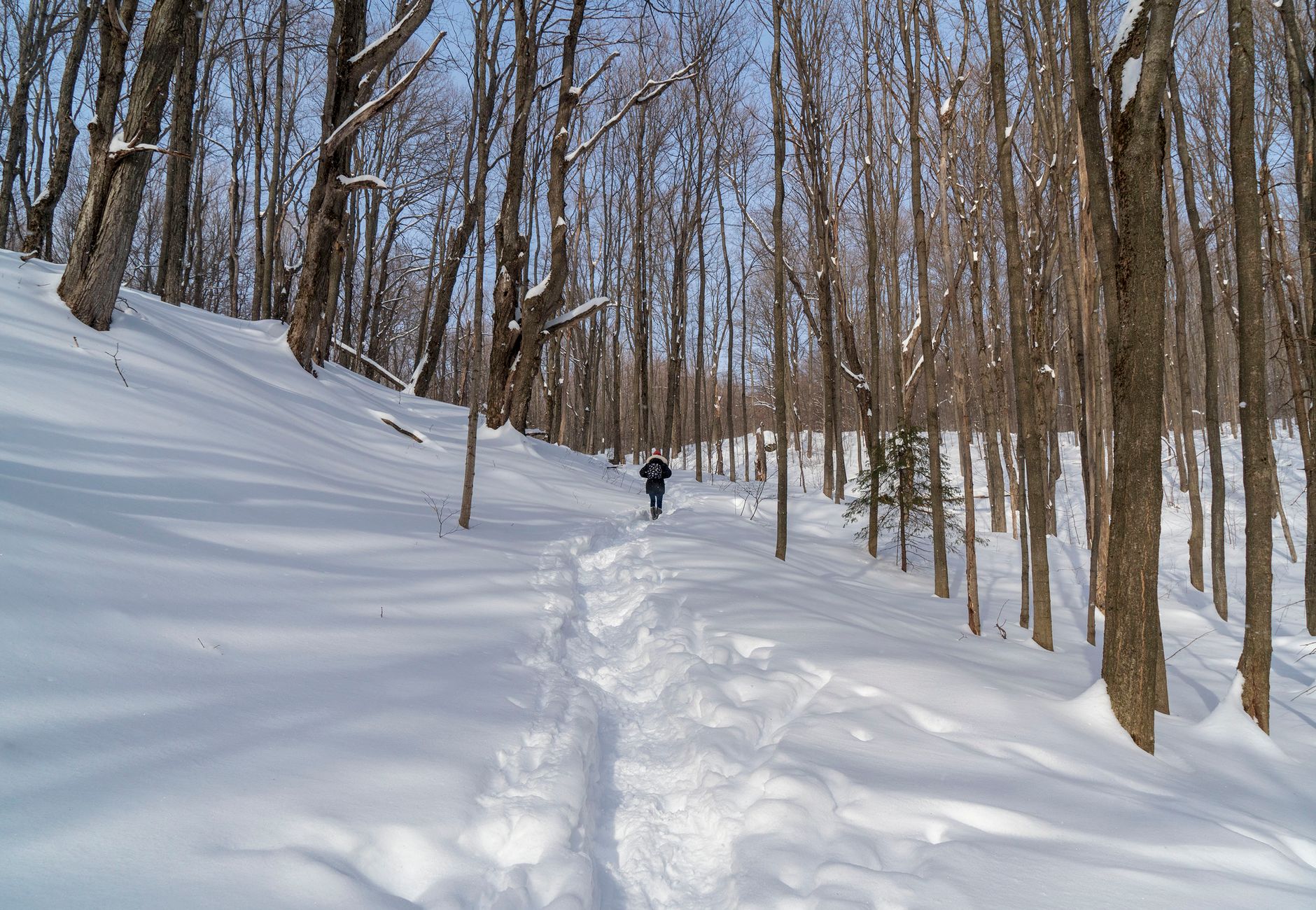 Photo by Hyukman Kwon on Pexels.
Snowshoeing and winter hiking in the Allegheny Highlands give you access to landscapes that most visitors never see: frozen creek crossings, hemlock groves draped in snow, ridgelines that glow amber at dusk when the temperature drops and the sky goes clear. You don't need specialized gear or serious mountaineering skills. What you do need is a good pair of waterproof boots, a willingness to move slowly, and a basic understanding of where to go.
Why Winter Changes Everything Out Here
The Allegheny Plateau sits at elevation, which means Ebensburg and the surrounding county tend to get real winter. Snowfall accumulates here more reliably than in the lower valleys, and trails that feel pleasant but ordinary in July become genuinely spectacular under a foot of white. Sightlines open up once the leaves drop. You can see through entire hillsides to the next ridge over, watch deer trails cross a frozen meadow, and track fox prints along a stream bank without any of the visual noise of summer.
For snowshoers specifically, moderate snow depth (six inches or more) transforms flat or gently rolling terrain into a legitimate workout. Cambria County has no shortage of that kind of terrain.
Trails Worth Knowing
Ghost Town Trail gets most of its press as a warm-season cycling destination, but the packed cinder surface holds snow well and the gentle grade makes it accessible on snowshoes or microspikes when conditions are right. The section between Nanty Glo and Wehrum passes through old mining landscapes and quiet forest. In winter, with no leaves to filter the view, the remnants of those old communities read differently against the snow. Take your time through that stretch.
Blue Knob State Park sits about 25 miles from Ebensburg and tops out at 3,146 feet, the second-highest point in Pennsylvania. While most winter visitors head straight for the downhill ski area, the park's hiking trails see almost no foot traffic once snow falls. The trails around the summit ridge are exposed and require proper cold-weather preparation, but the lower forest paths are manageable for anyone in decent shape with traction devices. Views from the upper sections on a clear day extend far enough that you can lose track of time.
Prince Gallitzin State Park, west of Ebensburg near Patton, offers winter walking around Glendale Lake on surface trails that rarely get icy enough to cause problems. The mixed hardwood and pine forest holds onto snow beautifully. This one works well for beginners or families with kids who want to be outside without committing to anything too demanding.
What to Carry
The ten essentials apply in winter more than any other season. A few specifics worth emphasizing for cold-weather hiking in this region:
- Traction devices (microspikes or snowshoes depending on depth) matter more than most people expect. Even a modest slope becomes treacherous on compressed snow.
- Extra insulation in your pack. You generate heat while moving, but the moment you stop for lunch on a ridgeline with wind, temperatures feel 15 degrees colder.
- Water. Cold air is dry air, and people consistently underdrink in winter. A wide-mouth insulated bottle keeps water from freezing.
- A paper map or downloaded offline route. Cell coverage in the hollows and deep forest around Cambria County is inconsistent year-round; in winter with a dying phone battery, it gets worse.
Reading Conditions Before You Go
Pennsylvania's highlands weather swings hard. A trail that's pleasant on Saturday can be icy and miserable by Sunday afternoon after a freeze-thaw cycle. Check the National Weather Service forecast for the Johnstown/Altoona area before any winter outing. Pay attention to overnight lows: anything below 20°F followed by afternoon sun tends to create a crust that makes snowshoeing awkward and hiking slippery.
The Pennsylvania Department of Conservation and Natural Resources posts trail and park condition updates during major weather events. It takes two minutes to check and can save a trip.
The Quiet Is the Point
People who've only seen Ebensburg in summer or fall sometimes underestimate what the region offers once the cold sets in. The town itself has a particular quality on winter mornings, smoke rising from chimneys along the main streets, the courthouse square dusted white, the whole place still and unhurried. Pair a morning in town with an afternoon on a snowy trail and you have a genuinely memorable cold-weather outing.
Winter hiking out here rewards patience and preparation. Show up ready, and the Alleghenies will meet you more than halfway.
Get Visit Ebensburg in your inbox
New posts delivered directly. No spam.
No spam. Unsubscribe anytime.